In quantum physics, the uncertainty principle states that you cannot simultaneously know a particle’s exact position and momentum. The more precisely you measure one, the less precisely you can know the other. This is not a limitation of measurement tools. It is a fundamental property of reality.
Modern project management operates under a remarkably similar constraint.
Certainty is conserved
In complex projects, you cannot have perfect certainty about what you are building and how fast you are building it at the same time. The harder you lock down one dimension, either scope, budget, or timeline, the more uncertainty is forced into the others.

This is not a failure of planning, tooling, or methodology. It is a structural reality of human systems operating under change.
Why overplanning fails
Traditional management instincts often respond to uncertainty by adding more controls: more documentation, more approvals, more detailed roadmaps. While this can create the appearance of certainty, it often increases risk instead of reducing it.
Detailed plans are based on assumptions. In environments where requirements evolve, stakeholders learn, and external constraints shift, those assumptions decay quickly. Overplanning does not remove uncertainty, it concentrates it until it surfaces later as missed deadlines, rework, or burnout.
"Agile didn’t remove uncertainty, it chose where to put it"
Agile frameworks did not eliminate uncertainty; they deliberately relocated it.
Instead of fixing long-term scope, Agile stabilizes cadence and learning. Timeboxes, reviews, and frequent feedback loops act as controlled environments where uncertainty can be revealed early, safely, and continuously.
Waterfall approaches, by contrast, attempt to fix scope early and accept higher uncertainty in delivery time and real-world fit. Neither approach is inherently wrong; they simply choose different uncertainty trade-offs.

Leadership is uncertainty management
Experienced project leaders stop asking, “Are we on plan?” and start asking, “Where is uncertainty accumulating right now?”
They understand that:
- Risk rarely appears suddenly
- Uncertainty grows silently where certainty is over-asserted
- Learning reduces uncertainty more effectively than control
Strong leadership does not pretend uncertainty doesn’t exist. It budgets for it, exposes it early, and makes it visible to decision-makers.
Practical implications
Modern project management works best when:
- Cadence is fixed, not outcomes
- Commitments are probabilistic, not absolute
- Early experimentation is encouraged
- Reversible and irreversible decisions are treated differently
These practices do not weaken accountability. they strengthen it by aligning expectations with reality.
The takeaway
In complex projects, certainty behaves like a conserved quantity. Reducing uncertainty in one dimension inevitably increases it in another.
Understanding this does not make projects easier, but it makes failure less surprising, decisions more honest, and leadership more effective.
Managing the Uncertainty You Can’t Remove
- Fix the container, not the contents Lock cadence, review rhythm, and decision forums. Let scope evolve inside a stable structure.
- Make uncertainty visible early Track assumptions, not just tasks. If something is “high confidence,” ask why.
- Replace promises with probabilities Use confidence ranges instead of absolutes. “70% likely by June” is more honest—and more useful—than false certainty.
- Decide slow only when you must Separate reversible decisions from irreversible ones. Speed up everything that can be undone.
- Learn before you commit Prototypes, spikes, and pilots collapse uncertainty faster than planning workshops ever will.
- Watch for artificial certainty Overly precise timelines, fixed scope too early, or “green dashboards” are often warning signs—not reassurance.
- Ask the right question in reviews Not “Are we on track?” But: “Where is uncertainty increasing, and what are we doing about it?”
Complexity isn’t the enemy. Pretending it doesn’t exist is.
I’m open to advisory and delivery-leadership conversations with organizations that want to manage uncertainty deliberately, not react to it late.
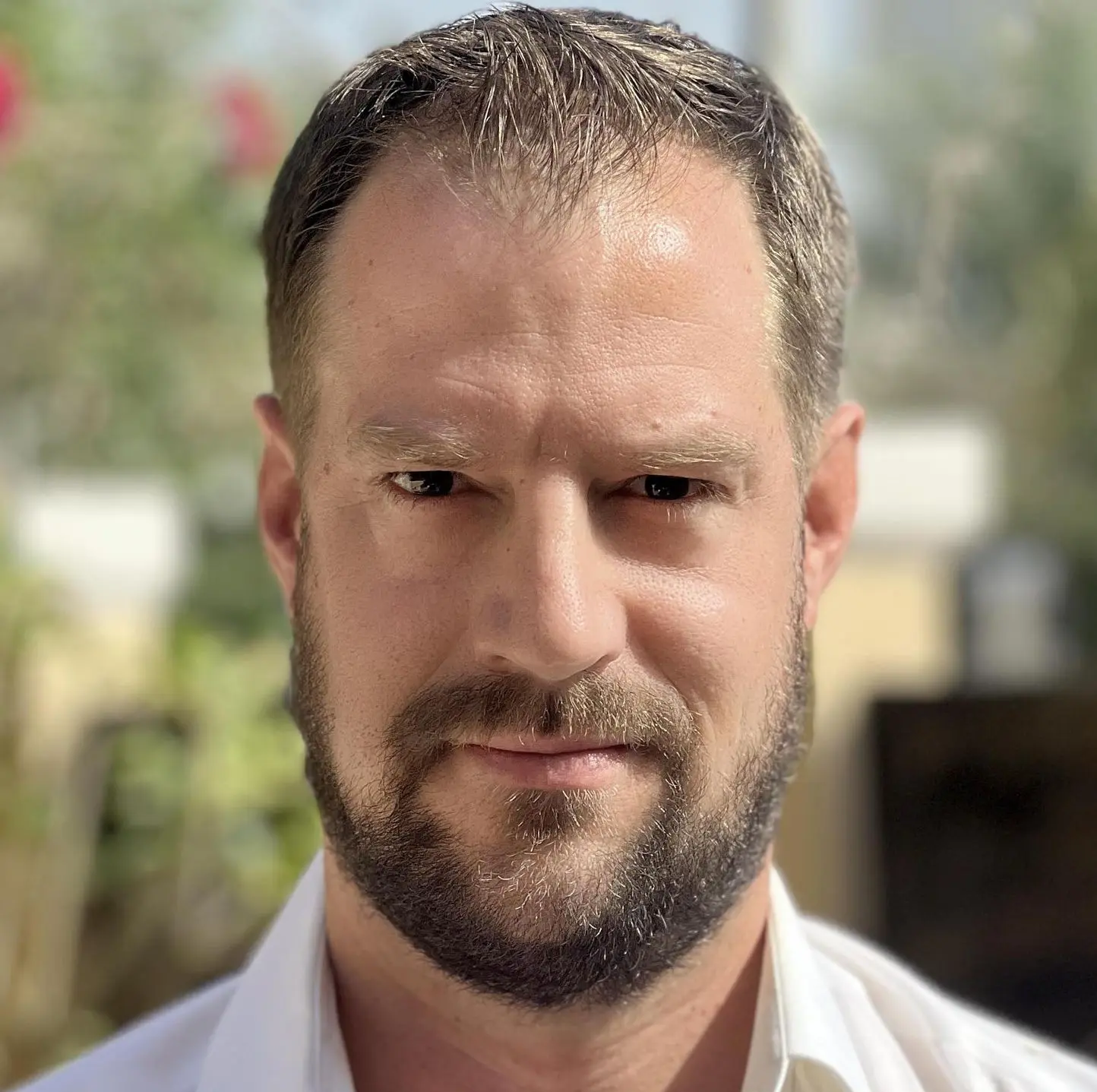
Paul Emous
Program Director | Security Advisor | Technical Extended Range Instructor Trainer
Focused on mission-critical IT, digital transformation, and sovereign system design. He leads complex multi-prime environments across Europe and the Middle East, acting as a neutral authority to de-risk delivery and ensure predictable outcomes.
Separately, Paul is a Technical Extended Range Instructor Trainer and expedition leader in advanced and remote diving. He teaches Just Culture and decision-making under pressure, where risk is real and accountability is absolute.
Contact: paul@mousemedia.nl